



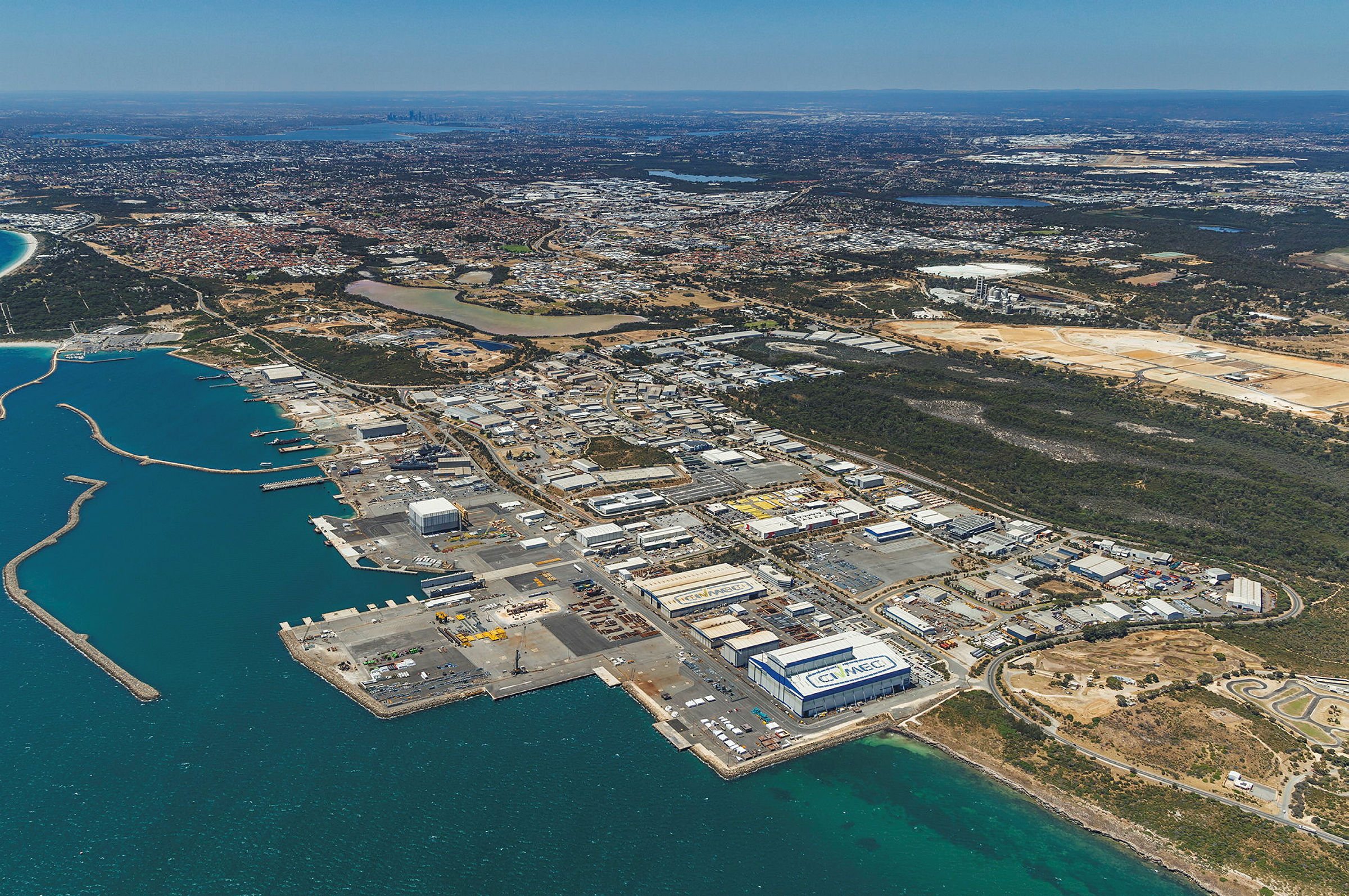
A major AUKUS infrastructure milestone has been reached with the announcement of the Henderson Defence Precinct site and boundary(Opens in a new tab/window) in Western Australia, paving the way for critical facilities that will support Australia's future conventionally armed, nuclear-powered submarines.
The announcement(Opens in a new tab/window) includes the preferred location for the future sustainment of Australia's conventionally armed, nuclear-powered submarines and represents important progress in delivering the AUKUS Optimal Pathway.
The program to deliver the Defence Precinct will now progress into a concept design phase, which will see further engagement between the federal and state governments, local industry, technical design and planning partners, and other key stakeholders.
The Henderson Defence Precinct will provide the facilities for deeper maintenance known as ‘depot-level’, and contingency maintenance, both of which occur out of water.
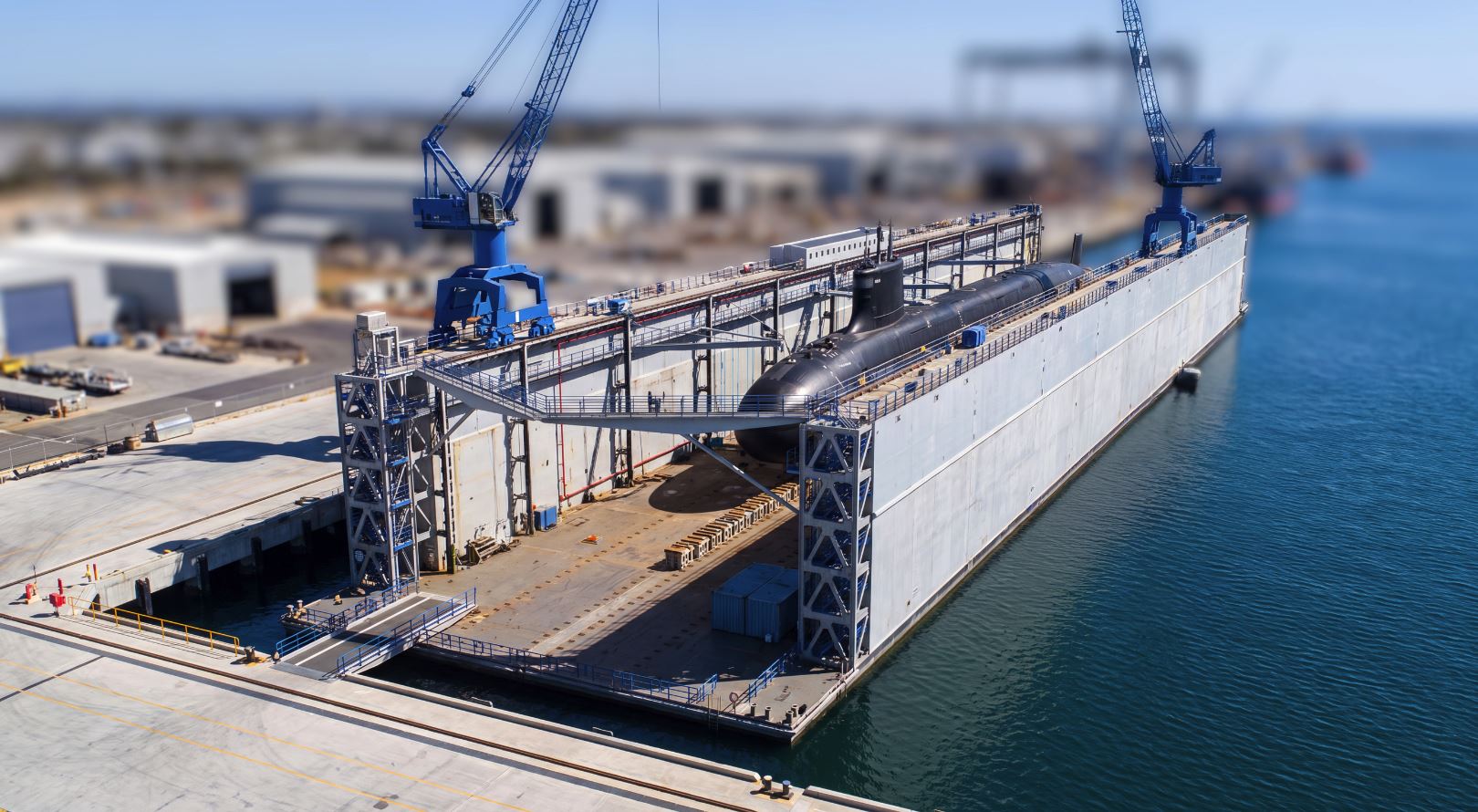
A contingency dry dock capability and associated sustainment infrastructure will play a critical role in ensuring the long-term readiness and availability of our future submarines for the Royal Australian Navy.
The precinct will also include shipbuilding facilities for the construction of larger and more complex vessels, and a modern surface fleet sustainment yard for Australia's surface combatant vessels.
The Henderson Defence Precinct will be a key component of Australia's future submarine enterprise, supporting shipbuilding and the range of maintenance activities.
Osborne will be the centre of construction of Australia's SSN-AUKUS nuclear-powered submarines. HMAS Stirling will be the operational base for Australia's future submarine fleet where they will receive in-water maintenance. Australia is progressively building a sovereign submarine maintenance capability through initiatives such as Submarine Maintenance Periods and the establishment of Submarine Rotational Force-West at HMAS Stirling.
The announcement builds on recent progress in establishing Western Australia's future submarine sustainment infrastructure, including the selection of Leidos Gibbs & Cox Australia(Opens in a new tab/window) to undertake preliminary design work for a floating contingency dry dock capability that will support Australia's future conventionally armed, nuclear-powered submarines.
Together, these investments are helping establish the infrastructure, industrial capability and workforce needed to sustain Australia's future submarine fleet and strengthen cooperation with AUKUS partners, the United States and the United Kingdom.
A contingency dry dock capability and associated sustainment infrastructure will play a critical role in ensuring Australia can operate, maintain and sustain its future submarines while contributing to regional security and stability.
These capabilities will be delivered in accordance with Australia's domestic regulatory frameworks and international obligations, maintaining the highest standards of nuclear safety, security and safeguards.
The Henderson Defence Precinct will create an intergenerational pipeline of continuous naval shipbuilding and sustainment in Western Australia and, together with activities at HMAS Stirling, support around 10,000 jobs over the next two decades while helping grow the skilled workforce required to deliver Australia's future submarine capability.
Learn more about the Henderson Defence Precinct on the Defence website.(Opens in a new tab/window)